Tag Archives: Life Sciences

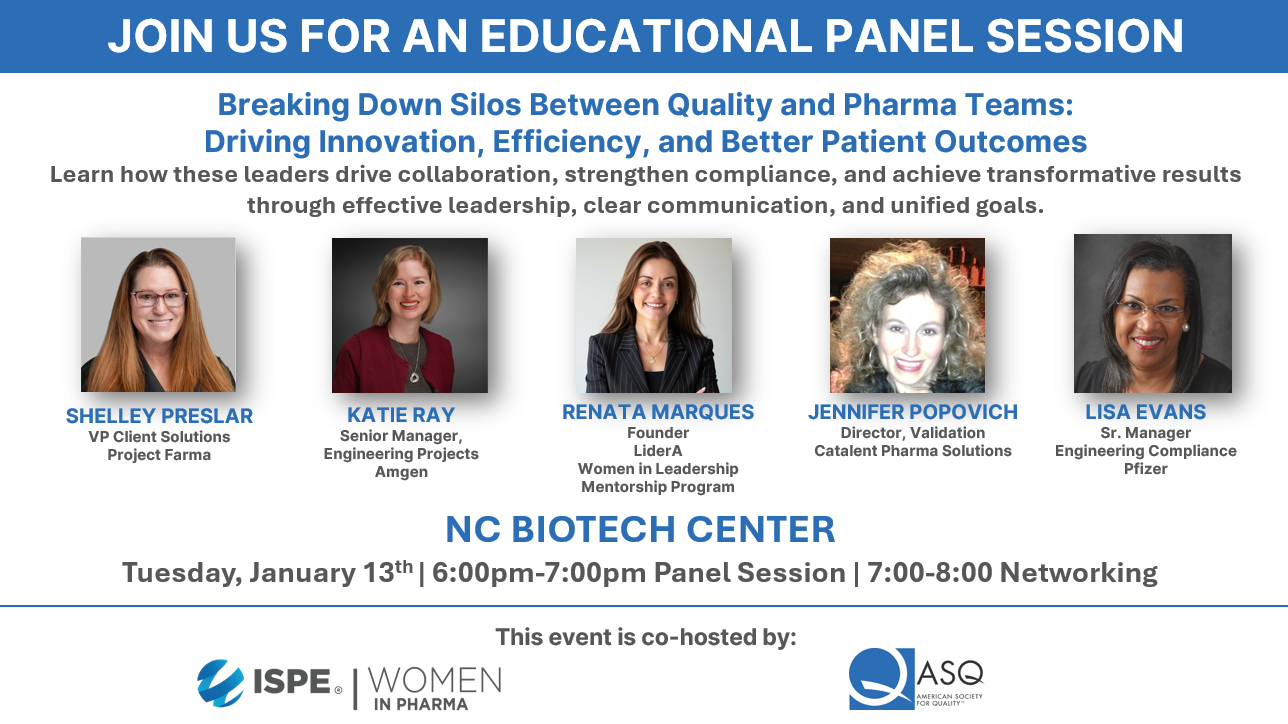
ASQ Women in Quality (WIQ) and ISPE Women in Pharma (WIP) Joint Panel Discussion

Title: Breaking Down Silos Between Quality and Pharma Teams: Driving Innovation, efficiency, and Better Patient Outcomes

In this panel session, five industry leaders, Shelley Preslar, Katie Ray, Jennifer Popovich, Renata Marques, Lisa Evans, will share real-world insights on how strong leadership, clear communication, and shared goals foster collaboration, enhance compliance, and deliver transformative results.

WIQ SIG Panel Jan 2026


Registration includes light appetizers and two drink tickets.

Agenda:

  • 5:30PM: Registration
  • 6-7PM: Panel
  • 7-8PM: Networking

Contact Information: Please reach out to Ashley Norris with any questions. Email: ashleynorris@projectfarma.com

ASQ Raleigh Life Sciences SIG meeting

Life Sciences SIG — November 2025

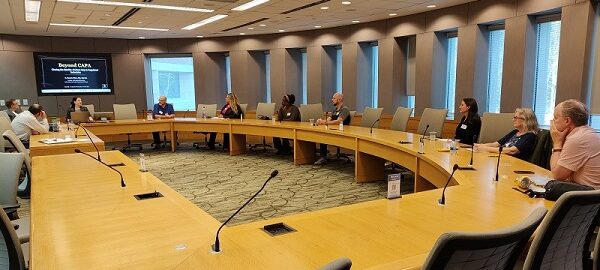
ASQ Raleigh held its last Life Sciences Special Interest Group (SIG) meeting of 2025 at the NC Biotech Center on the evening of November 19, 2025. We had thirteen attendees representing a range of professional backgrounds, including a recent graduate, seasoned Quality professionals, and industry consultants. Four were first-time attendees of our SIG events.

Our speaker, Nathan Blazei, is an experienced life sciences leader with a background in Quality and Regulatory Affairs. He presented his perspectives on Quality 4.0, titled “Unlocking Efficiency, Consistency, and Insight: Potential Use Cases for Artificial Intelligence in Quality Assurance.”

After a brief introduction to Quality 4.0 and associated technology, Nathan presented three potential use cases and led the discussion beyond these applications.

  • Event investigation
  • Procedure creation
  • Inspections

A common theme of the applications is automation and artificial intelligence (AI) tool’s ability to process large amounts of data. Generative AI tools can also help summarize the information from diverse data sources and answer queries quickly, saving time and improving performance.

Participants recognized that while promising, most AI systems and tools were new and in development, and few had been tested or validated in the real world. To be truly useful, the AI systems have to be integrated with the business and be trained with domain-specific data.

The fact that many AI tools are “black box” solutions was also a concern — how much can we trust the information or answers? Can we interpret it? How do we validate it? Participants seemed to agree that the tools are useful for generating the initial documents, solutions, or recommendations, which can be a time-saver, but human experts still have to fill the gaps and make the final decisions.

Despite concerns about limitations of the current technology, the participants were enthusiastic about its potential applications in Quality and Continuous Improvement, bringing up many ideas on their wish lists: pulling knowledge embedded in the organization, performing root cause analysis, creating video-based Standard Operating Procedures (SOPs), integrating skills from different experts, AI-assisted procedures, etc.

We would have continued our discussion beyond the two hours if the building security didn’t ring the bell. More is to come next year, so check our events calendar often.

ASQ Raleigh SIG meeting

SIG Meeting — November 13, 2025

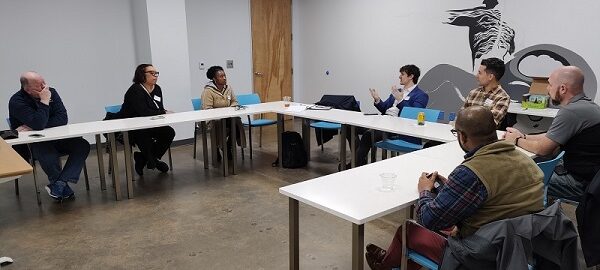
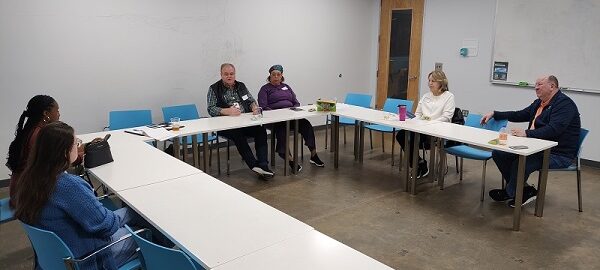
A group of seven people attended the November Special Interest Group (SIG) at Frontier RTP. Two people were first-time attendees at ASQ Raleigh SIG events.

One of the benefits of small group in-person events is the opportunity to get to know each other, whether to meet new people or catch up with old friends. The two-hour event provided plenty of time for personal introductions and various discussion topics.

One attendee brought up the topic of “Living Quality” — a company initiative to drive a Quality Culture from a product lifecycle perspective. The quality culture topic has repeatedly come up in many meetings. “Quality is everyone’s responsibility” seems obvious but hard to realize in an organization — from the top management to the shop floor and across all functions.

What’s also interesting was that the company was in the middle of splitting into two entities, potentially involving mergers and acquisitions. Participants agreed that Quality cannot be separate from the process that creates value. Quality is not a shared service like Information Technology (IT).

As usual, in addition to quality culture, several participants talked about their jobs, customers, products, and processes involved. It’s always enlightening to learn about other businesses and see similar challenges.

One of the new attendees was a recent Ph.D. graduate in life sciences looking into Quality as a potential career path. Several participants shared their career journeys and answered the question “How did you get into Quality?” A common answer is “That wasn’t my plan when I started!” There are always plenty of personal stories to share.

The next monthly SIG meeting will be on December 19, 2025 (at the same time and location).

ASQ Raleigh Life Sciences Special Interest Group Meeting — November 19, 2025

This event is free and open to the public. No ASQ membership is required. ASQ members will receive RU credits for attending.

Title: Unlocking Efficiency, Consistency, and Insight: Potential Use Cases for Artificial Intelligence in Quality Assurance

Abstract:

As regulated manufacturing operations embrace modern digital tools and advanced analytics, Quality Assurance (QA) faces mounting pressure to manage greater complexity and faster decision cycles. Artificial intelligence (AI) offers powerful tools to meet these challenges by enhancing efficiency, consistency, and insight across the quality landscape.

This collaborative discussion explores practical use cases where AI tools can be deployed to deliver value in QA. By connecting these applications under the broader framework of Quality 4.0, this session will illustrate how AI can shift QA from a reactive, compliance-focused role to a proactive, data-informed partner in manufacturing excellence.

Attendees will have the opportunity to share how AI tools may be gaining traction within their own QA organizations to provide real-world examples that may resonate with the entire group.

Presenter: Nathan Blazei, ASQ-CQA, RAC-US, Senior Director, Strategic Solutions at Kymanox

Bio:

Nathan is a versatile life sciences professional with nearly 25 years of experience across biopharmaceuticals, medical devices, and combination products in individual contributor and leadership roles. He has experience working for start-ups and global manufacturers, as well as in professional services/consulting. He is passionate about commercializing safe and effective products that will improve the quality of life for patients and their caregivers.

Nathan’s career foundation began in engineering, product and process development, manufacturing, continuous improvement, and program management roles. Over time, he made a transition to focus on quality and regulatory compliance to complement his technical experience. At the intersection of these disciplines is where he has found success over the years, as he can provide solutions that are not only technically sound, but also compliant with evolving regulatory requirements and at the leading edge of industry best practices.

Nathan acquired the Certified Quality Auditor (CQA) designation through the American Society for Quality (ASQ) and hold a Regulatory Affairs Certification (RAC-US) through the Regulatory Affairs Professionals Society (RAPS). Additionally, he is currently a Board Member for the Parenteral Drug Association (PDA), Southeast Chapter. Nathan has presented at domestic and international industry events on various topics relevant to the life sciences to share best practices, lessons learned, and new approaches to solving problems.


Register here.

ASQ Raleigh SIG meeting

SIG meeting — October 9, 2025

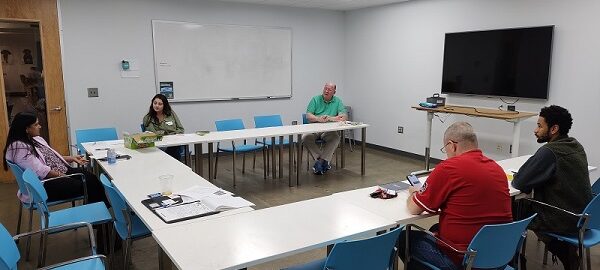
On October 9, 2025, a small group of six people attended ASQ Raleigh’s monthly Special Interest Group (SIG) meeting at Frontier RTP. One person was a first-time attendee and non-member, who has many years of experience in Quality and was interested in joining ASQ.

Alexia Storey led the discussion around Change Control with a number of real-world questions and scenarios. A key question was “how much do we want a robust Change Control process versus people who have the competency to perform a change control effectively?”

A benefit of having a small group is that everyone has more opportunity to contribute to the discussion. The participants brought up their questions and perspectives. Overall, many questions were related to impact assessment, risk management, and roles & responsibilities of the quality manager and various stakeholders, including the Change Control Review Board or Committee.

One of the scenarios was about changes allowed after the initial approval — how much flexibility do we have during implementation without going through another change control? How much feasibility study and impact assessment should be done before approval and how much unspecified change or risk is expected? Some participants shared the practice of using amendments to address additional changes.

Another key point of discussion was defining and evaluating the change effectiveness. This will help us ensure that the implementation does what we intended to accomplish with the change.

The next monthly SIG meeting will be on November 13, 2025.

ASQ Raleigh Life Sciences Special Interest Group Meeting — May 20, 2025

This event is free and open to the public. No ASQ membership is required. ASQ members will receive RU credit for attending.

Title: The crucial role of The Clinical Quality Management Plan (CQMP) in establishing site-based protocol integrity

Presenter: Dr Alan Touch

Summary:

The Clinical Quality Management Plan (CQMP) for clinical trials is a structured approach to ensuring the integrity, reliability, and compliance of clinical research at the site level. It is core to maintaining Good Clinical Practice (GCP)standards and regulatory requirements throughout the trial process.

CQMP establishes the quality management guidelines for tasks related to the Sponsor, CRO and Study Site for responsibilities for a defined Clinical Trial Protocol. This plan is normally the responsibility of the Sponsor Quality Assurance department although its development and implementation can be facilitated by a Quality and GCP Audit Partner.

This presentation will delineate the critical role of CGMP in GCP, a delineation of the actual types of content for a CGMP, the steps to the development of the CQMP and the effect the 21st Century Cures Act on these responsibilities and current US FDA expectations regarding site responsibility for clinical trial protocol data integrity.

Who Should Attend:

  • Quality and Clinical Development personnel
  • Regulatory personnel
  • Clinical trial project managers
  • Site study personnel
  • Site Management Organization administrators


Register here.

Advancing Innovation: Early-Stage Research in Biotech Startups

Welcome to Advancing Innovation: Early-Stage Research in Biotech Startups! Join us at the North Carolina Biotechnology Center for an exciting in-person event focused on cutting-edge research in the biotech industry.

Join Dr. Saira Ahmad, co-founder of Eldec Pharmaceuticals Home – Eldec Pharmaceuticals for this exciting opportunity! Dr. Saira Ahmad will discuss her career journey leading to working in biotech startups. She will outline the various roles and pathways essential for navigating the early stages of research and development in emerging biotech companies.

Don’t miss this opportunity to be a part of the innovation driving the biotech sector forward. Register now and secure your spot!

About our Speaker:

Dr. Saira Ahmad is the Director of Science at Eldec Pharmaceuticals. She earned her Ph.D. in Biosciences, specializing in Microbiology and Infectious Diseases, from George Mason University. During her doctoral studies, she was awarded a National Science Foundation fellowship to support her research.. She later completed her postdoctoral research at the University of North Carolina at Chapel Hill, where she received a National Institutes of Health T32 fellowship to investigate peptides for antimicrobial activity and anti-inflammatory effects in pulmonary infections. With her extensive expertise in immunology and drug testing, Dr. Ahmad oversees the scientific research for preclinical drug development at Eldec Pharmaceuticals.

Light Snacks will be provided. Open to all; but ASQ Members will recieve RU Credits.

ASQ Raleigh Special Interest Group Meeting

Life Sciences SIG — March 2025

Last Friday, fifteen people gathered at the NC Biotech Center, where Dr. Milton Krivokuca, an ASQ Fellow, led the discussion on integrating data science and quality to achieve organizational excellence.

After each attendee introduced themselves, Dr. Krivokuca shared his personal journey and decades of association with ASQ and its members. A key message was that connections created by ASQ could lead to new opportunities!

The first half of Dr. Krivokuca’s presentation was focused on the technical, social, personal, and managerial aspects of Quality 4.0 — how does technology enable the organization? Specifically, how do organizations achieve different levels of data/digital maturity? It’s certainly challenging for an organization to respond and adapt quickly to technological advancement while staying focused on its business, customers, and employees.

In addition to understanding what data science (or big data, machine learning, artificial intelligence, etc.) means, the discussion of digital transformation again pointed to organizational culture and how people respond to change.

The first breakout session had three key questions:

  • What are your perspectives of where the data scientist should reside in an organization?
  • Do these quality-data science concepts align with your organization’s digital transformation?
  • What next steps wold be most appropriate for your organization?

Three breakout groups shared their perspectives, for example

  • How to communicate change to employees and customers?
  • How to manage varying levels of digital maturity within the organization? Where do we start?
  • How to overcome the tendency of implementing technology in silos without considering the value stream?
  • What systems or governing structures do we need?

The second half of the presentation and breakout discussion moved into understanding data science and data scientists, making the connection between continuous learning (data science) and continuous improvement (quality).

A key question was “what’s the role of a data scientist?” The related questions are

  • What skills (technical and non-technical) are needed for successful transformation?
  • Which skills do quality professionals already have?
  • How should the organization be designed to develop data science capability?
  • How do Quality and IT organizations fit in the transformation?

The discussion could definitely use more time than scheduled. We look forward to more sessions on such topics. Let us know if you have any suggestions!

ASQ Raleigh Special Interest Group Meeting — April 10, 2025

The SIG event is participant-driven — we will have open discussion around topics related to the quality profession. We may have a theme but no formal speakers or agenda. Everyone is encouraged to participate in the discussion. So bring your questions and ideas to share with other participants.

Theme of the month: Experiences with CAPA: a discussion led by Tim Whetten

This event is free and open to anyone who is interested in the quality profession. No ASQ membership is required. ASQ members will receive RU credit for participation.

We will meet at Frontier RTP (first floor) at 4:30pm or whenever you can join us. It will be during Frontier RTP’s weekly Out of Office event. It’s a great opportunity to connect with people in the triangle community. More information will be provided to the registered attendees before the event.

Register here.

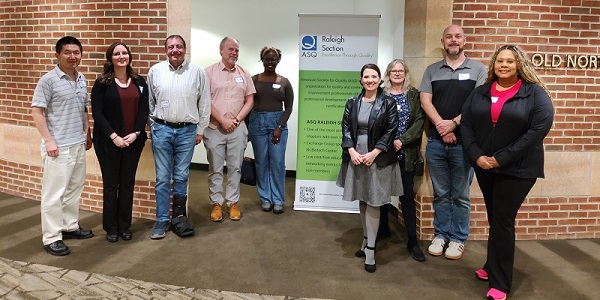
Photo of ASQ Raleigh SIG meeting attendees

Six Sigma SIG — February 2025

It’s been a while since we had our Six Sigma Special Interest Group (SIG) meeting. This month’s topic was “How Effective is Lean Six Sigma?” We had 18 people attending at the NC Biotech Center, which sponsors ASQ Raleigh and has a state-of-art conference center for the event.

The attendees represented various industries such as life sciences, semiconductors, and manufacturing. About one third were non-ASQ members, and 40+% were first-time attendees.

To help build the Quality community, four ASQ Raleigh member leaders (i.e. volunteers who make things happen) welcomed the audience and gave an introduction of ASQ and ASQ Raleigh.

Given the range of attendee’s experience in Continuous Improvement, the meeting started with a 30-minute refresher on the Lean and Six Sigma methodologies, prompting reactions and ideas on the challenges and opportunities in the current environment, which was the focus of the break-out session.

After about 50 minutes of active discussion, three break-out groups shared their key takeaways, touching various questions, such as

  • How to help change the culture?
  • How can Lean Six Sigma help drive change?
  • How do we address the challenges related to bringing back manufacturing to the US?
  • How do we gain buy-in from senior management?
  • How to apply Lean and/or Six Sigma in non-manufacturing, such as R&D and IT?
  • What kinds of incentives are effective for different demographics?

A few ideas emerged as potential topics for future events.

  • What is a Kaizen event? How do you lead such events?
  • How do you align or prioritize Continuous Improvement effort or projects?
  • What could business process re-engineering look like now (compared to the 90’s)?
  • How can Lean Six Sigma help R&D, Quality, and tech transfer?
  • How do we engage people in Continuous Improvement?

Thanks to all participants for their contributions. We will have many ideas to work from.

The next event will be the monthly Quality Special Interest Group at Frontier RTP on Thursday, March 13.