Category Archives: SIG

ASQ Raleigh SIG meeting

SIG Meeting — April 9, 2026

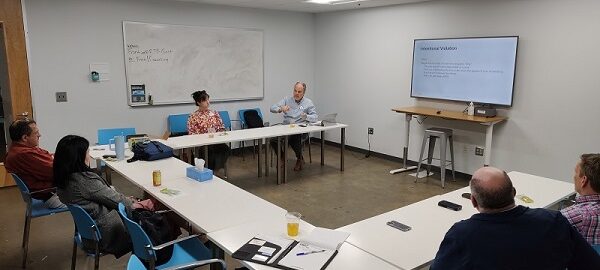
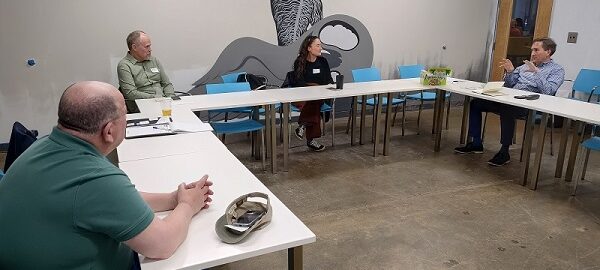
The monthly ASQ Raleigh Special Interest Group (SIG) meeting at Frontier RTP in April had seven participants, all ASQ members who had attended SIG meetings regularly.

We had a discussion theme on “human error” led by Tim Whetten, who planned to submit an abstract around this topic for the annual ASQ Raleigh “Quality in the Triangle” (QIT) conference in October. This in-person SIG meeting was a perfect forum for him to get some feedback and ideas.

Tim started his presentation (a draft version) with understanding various types of work and then common errors associated with each type. Much of the discussion went into the potential causes of each kind of errors and how we might prevent or reduce such errors.

All attendees actively participated in the discussion by asking questions or sharing their personal experiences. One question was simple but profound: “what is human [vs non-human] error?” We all learned from Deming that quality is mostly determined by the systems or processes as designed. Defining and identifying “human” errors is not as trivial as one might think.

Not surprisingly, work involving humans requires cognition, such as perception, memory, and decisions. How people learn and use their knowledge and skills to get work done right in a given environment is complex and fascinating.

We are looking forward to seeing Tim Whetten present at the QIT conference and share his personal story and perspectives on this important topic.

Our next SIG meeting will be on May 14, 2026 at the same place and time.

ASQ Raleigh Life Sciences SIG meeting

Life Sciences SIG — March 26, 2026

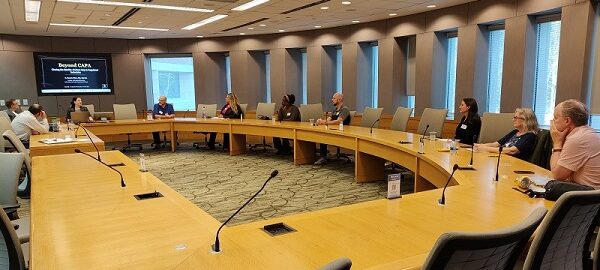
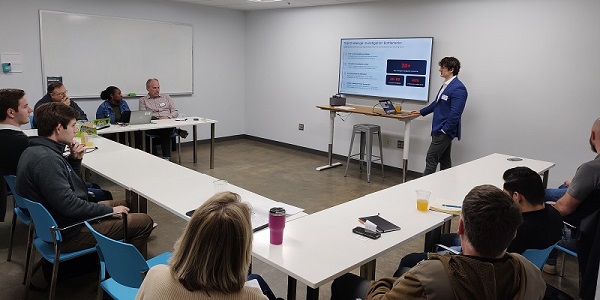
ASQ Raleigh had its first Life Sciences Special Interest Group (SIG) meeting of 2026 on March 26th. The event was held at the NC Biotech Center, where we are one of the Intellectual Exchange Groups that help build the vibrant Life Sciences community in North Carolina.

Despite the bad evening traffic, eleven people were able to make it to the meeting, where Dr. Elizabeth Gilbert presented “Beyond CAPA: Closing the Quality–Culture Gap in Regulated Industries.”

One of the points of discussion was the increasing number of FDA warning letters in the recent years. What are the potential causes? Dr. Gilbert led the discussion on the gaps in documented systems and lived behavior in many organizations.

Culture, systems, management, and leadership can influence employee behavior and therefore quality outcomes. Many of the participants could relate to these interacting factors from experience. Trust and psychological safety was a critical consideration, e.g. can operators stop the production or bring up issues? It’s hard to have a quality and Continuous Improvement culture without engaged employees who feel valued and empowered.

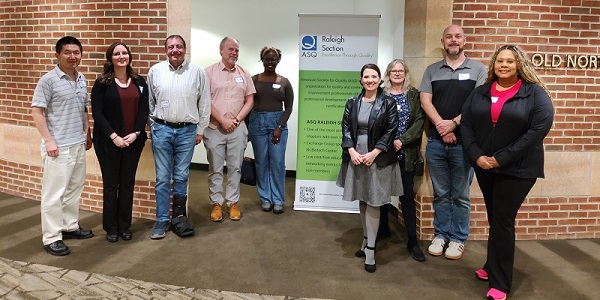
The meeting ended with a group photo with our new ASQ Raleigh banner! Thanks Dr. Gilbert for the thought-provoking presentation.

ASQ Raleigh Life Sciences SIG attendees gathering at the NC Biotech Center

Want to know more about what we discussed? Come to our next event!

Are you interested in presenting at our SIG meetings? Do you know someone who might be interested in presenting? Please let us know. ASQRaleigh@sections.asq.org

ASQ Raleigh SIG meeting

SIG Meeting — March 14, 2026

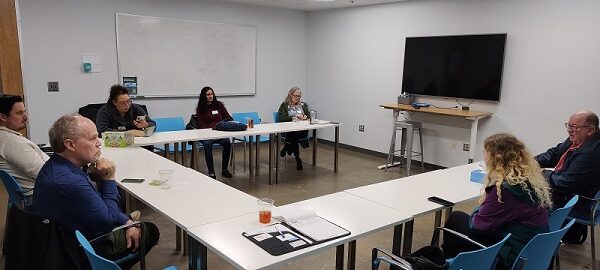
We gathered on March 12th at 4:30 PM for the Second Thursday SIG (Special Interest Group) Six Sigma meeting, held at Frontier RTP. Eleven participants, including both regular attendees and a few new faces, came together for an upbeat and engaging discussion of current quality topics.

A large portion of the conversation focused on auditing practices, including internal audits aligned with ISO 9001 and other standards, the role of the auditor versus the process owner, and practical approaches to sampling and evidence collection. Participants also shared insights on supplier audits, FDA-related risk considerations, and cultural challenges in global supply chains, along with practical tips helpful for those preparing for ASQ certifications.

The group also explored cybersecurity and software validation, particularly risks in regulated environments such as medical devices. The conversation included emerging AI-related concerns, liability, hallucinations, and model drift, alongside practical applications such as document gap analysis, NCR structuring, and early detection signals, with a clear emphasis on maintaining human oversight.

The next SIG Six Sigma meeting will be held April 9th at 4:30 PM, when Tim Whetten will open the discussion with a short session on dealing with human error when it is a cause in a nonconformance investigation. Register here!

ASQ Raleigh SIG meeting

SIG Meeting — February 12, 2026

ASQ Raleigh had its second Special Interest Group meeting at Frontier RTP on February 12. A small group of six people attended the meeting, including one new attendee, who became a member last year.

The ASQ Raleigh Section leadership team has been making effort to reverse the declining membership trend seen over the past few years, not just at the local section level but globally. It’s very important for us to understand how ASQ and ASQ Raleigh Section create value for our members and communities. The good news is that we have seen a significant increase in the recent Section membership (up by about 8%).

Since several attendees were on the Section leadership team, we naturally wanted to learn about the reason for the new member joining ASQ. What we learned was that their company was a startup and getting their product ready for the market, and they found ASQ as a good source of knowledge related to manufacturing, quality, regulation, and compliance.

Another attendee was not a member but interested in ASQ certification and career development. Participants shared their career lessons, including the importance of having mentors and being proactive in creating our own career paths.

We also acknowledged the change in the relationship between employee and employer in the past few decades. For example, it’s common to see people switch jobs every few years now, whereas the previous generation tended to stay with the same employer for decades. Switching jobs seems to be a more effective path to advance one’s career because few employers or managers are actively helping employees advance.

Our next meeting will be on March 12, 2026 at the same time and location. Hope to see you there!

SIG Meeting — January 8, 2026

The first ASQ Raleigh Section open discussion meeting of 2026 was well attended, with 14 participants, several of whom were newcomers! Following the lively discussion on AI in quality at our December meeting, Chris Andrassy volunteered to lead a session on integrating AI into nonconformance investigations and reporting. We discussed his implementation in which data is collected, guided by AI, followed by AI analysis, suggested likely root causes, and report generation.

ASQ Raleigh SIG meeting
Chris Andrassy shares his thoughts

There was extensive discussion about the interaction and roles of humans and AI. While AI can provide consistency, efficiency, and sometimes insights, it can also make mistakes and requires human oversight. Is there an issue with “oversight fatigue”, where human experts don’t notice AI errors? One suggestion was to use the interaction between the AI agent and the human, in which the AI agent asks the human probing questions.

It seemed as though a similar capability could be created for change control.

It was noted that, as with other quality areas, a process needs to be established with valid data before automating it with AI. To analyze the problem and identify potential root causes, AI needs a sufficient volume of accurate historical data.

Tim Whetten

ASQ Raleigh SIG meeting

SIG Meeting — December 11, 2025

The last Special Interest Group (SIG) meeting of 2025 welcomed three first-timers, among the eight attendees. One of them was preparing for his ASQ Six Sigma Green Belt (GB) certification and was interested in joining ASQ.

One of the attendees was a leader of a service provider using artificial intelligence (AI) to help their pharmaceutical clients in the quality and compliance area. He shared with us some of the work they did to automate tasks, reduce errors, and improve consistency.

Unsurprisingly, the topic of AI triggered many questions and responses among attendees. For example

  • Where do we see the most improvement when AI automates the tasks?
  • How much do we improve the the process before implementing AI or automation?
  • How do the AI models or tools integrate with the existing Quality Management Systems (QMS)?
  • How do we address regulatory or compliance concerns related to AI implementation?

Another attendee shared their experience using AI to process large amounts of literature and documents that humans just could not handle. But with AI, human experts only have to review a select subset of documents or a summary of the information. It sounded like many organizations have started experimenting with AI to evaluate its effectiveness and potential issues.

One of the concerns was people’s ability to learn and adapt to new technology vs. the speed of technological advance.

  • Who are responsible for keeping up with the change?
  • How much do employees have to learn on their own vs. training provided by employers?
  • How can the educational system, such as universities, prepare students for the future?

There was a general consensus among the participants that data integrity training provided by employers was insufficient and junior employees might not have the opportunity to build experience or critical thinking if AI was widely implemented.

The interest and discussion about AI will certainly continue in future meetings. So join us in 2026 at our monthly SIG meetings on the second Thursday at Frontier RTP.

Happy Holidays!

ASQ Raleigh Life Sciences SIG meeting

Life Sciences SIG — November 2025

ASQ Raleigh held its last Life Sciences Special Interest Group (SIG) meeting of 2025 at the NC Biotech Center on the evening of November 19, 2025. We had thirteen attendees representing a range of professional backgrounds, including a recent graduate, seasoned Quality professionals, and industry consultants. Four were first-time attendees of our SIG events.

Our speaker, Nathan Blazei, is an experienced life sciences leader with a background in Quality and Regulatory Affairs. He presented his perspectives on Quality 4.0, titled “Unlocking Efficiency, Consistency, and Insight: Potential Use Cases for Artificial Intelligence in Quality Assurance.”

After a brief introduction to Quality 4.0 and associated technology, Nathan presented three potential use cases and led the discussion beyond these applications.

  • Event investigation
  • Procedure creation
  • Inspections

A common theme of the applications is automation and artificial intelligence (AI) tool’s ability to process large amounts of data. Generative AI tools can also help summarize the information from diverse data sources and answer queries quickly, saving time and improving performance.

Participants recognized that while promising, most AI systems and tools were new and in development, and few had been tested or validated in the real world. To be truly useful, the AI systems have to be integrated with the business and be trained with domain-specific data.

The fact that many AI tools are “black box” solutions was also a concern — how much can we trust the information or answers? Can we interpret it? How do we validate it? Participants seemed to agree that the tools are useful for generating the initial documents, solutions, or recommendations, which can be a time-saver, but human experts still have to fill the gaps and make the final decisions.

Despite concerns about limitations of the current technology, the participants were enthusiastic about its potential applications in Quality and Continuous Improvement, bringing up many ideas on their wish lists: pulling knowledge embedded in the organization, performing root cause analysis, creating video-based Standard Operating Procedures (SOPs), integrating skills from different experts, AI-assisted procedures, etc.

We would have continued our discussion beyond the two hours if the building security didn’t ring the bell. More is to come next year, so check our events calendar often.

ASQ Raleigh SIG meeting

SIG Meeting — November 13, 2025

A group of seven people attended the November Special Interest Group (SIG) at Frontier RTP. Two people were first-time attendees at ASQ Raleigh SIG events.

One of the benefits of small group in-person events is the opportunity to get to know each other, whether to meet new people or catch up with old friends. The two-hour event provided plenty of time for personal introductions and various discussion topics.

One attendee brought up the topic of “Living Quality” — a company initiative to drive a Quality Culture from a product lifecycle perspective. The quality culture topic has repeatedly come up in many meetings. “Quality is everyone’s responsibility” seems obvious but hard to realize in an organization — from the top management to the shop floor and across all functions.

What’s also interesting was that the company was in the middle of splitting into two entities, potentially involving mergers and acquisitions. Participants agreed that Quality cannot be separate from the process that creates value. Quality is not a shared service like Information Technology (IT).

As usual, in addition to quality culture, several participants talked about their jobs, customers, products, and processes involved. It’s always enlightening to learn about other businesses and see similar challenges.

One of the new attendees was a recent Ph.D. graduate in life sciences looking into Quality as a potential career path. Several participants shared their career journeys and answered the question “How did you get into Quality?” A common answer is “That wasn’t my plan when I started!” There are always plenty of personal stories to share.

The next monthly SIG meeting will be on December 19, 2025 (at the same time and location).

ASQ Raleigh SIG meeting

SIG meeting — October 9, 2025

On October 9, 2025, a small group of six people attended ASQ Raleigh’s monthly Special Interest Group (SIG) meeting at Frontier RTP. One person was a first-time attendee and non-member, who has many years of experience in Quality and was interested in joining ASQ.

Alexia Storey led the discussion around Change Control with a number of real-world questions and scenarios. A key question was “how much do we want a robust Change Control process versus people who have the competency to perform a change control effectively?”

A benefit of having a small group is that everyone has more opportunity to contribute to the discussion. The participants brought up their questions and perspectives. Overall, many questions were related to impact assessment, risk management, and roles & responsibilities of the quality manager and various stakeholders, including the Change Control Review Board or Committee.

One of the scenarios was about changes allowed after the initial approval — how much flexibility do we have during implementation without going through another change control? How much feasibility study and impact assessment should be done before approval and how much unspecified change or risk is expected? Some participants shared the practice of using amendments to address additional changes.

Another key point of discussion was defining and evaluating the change effectiveness. This will help us ensure that the implementation does what we intended to accomplish with the change.

The next monthly SIG meeting will be on November 13, 2025.

ASQ Raleigh Six Sigma SIG meeting

Six Sigma SIG — September 2025

ASQ Raleigh held its second Six Sigma Special Interest Group (SIG) meeting of the year in the NC Biotech Center on September 23. Eleven people, including five non-ASQ members, came to the meeting for an evening of discussion. We were pleased to see seven first-timers who came because of interest in Quality Management Systems (QMS), the Shingo Model, or just Six Sigma and Continuous Improvement in general.

Our speaker, Tim Whetten, had previously led the discussion on QMS and the Shingo Model during our March SIG meeting. This time Tim went deeper and compared the Shingo Model to other frameworks, such as Baldrige, EFQM, and ISO9001.

While each of the frameworks has their unique design, components, primary markets and audience, they share many principles in quality and organization excellence, such as value, customer focus, and systems thinking.

After the initial presentation by Tim, the participants formed small groups and discussed the challenges and opportunities in implementing or improving QMS in their organizations. The participants shared their experience in QMS (or lack thereof) and pitfalls in its implementation. Many questions were raised during the discussion, for example

  • How is QMS different or related to general management?
  • How do organizations know which framework is best for them?
  • What is the right path given the organization’s current state?
  • What are some elements that are critical to QMS implementation?

As Tim continued his presentation, many discussion points converged to organization’s purpose, culture, leadership, cross-functional alignment, and employee engagement. All seemed to agree that QMS is not a tool or check-box exercises. It’s easy to fall into the mindset that “if we had a QMS tool, we have a QMS. ” QMS is much more central and integral to the entire organization than a software system.

Tim concluded the meeting by offering suggestions for next steps in “making it real” — what can we start doing now? One piece of his advice was Quality needs to “be helpful” to other stakeholders. Simple, but hard to do.

After over 2 hours of engaging discussion, the participants left the meeting with many thought-provoking questions and shared ideas.