Tag Archives: Artificial Intelligence

ASQ Raleigh SIG meeting

SIG Meeting — December 11, 2025

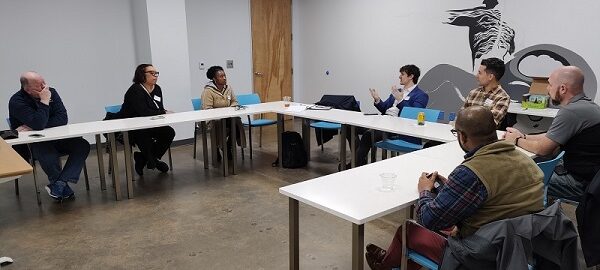
The last Special Interest Group (SIG) meeting of 2025 welcomed three first-timers, among the eight attendees. One of them was preparing for his ASQ Six Sigma Green Belt (GB) certification and was interested in joining ASQ.

One of the attendees was a leader of a service provider using artificial intelligence (AI) to help their pharmaceutical clients in the quality and compliance area. He shared with us some of the work they did to automate tasks, reduce errors, and improve consistency.

Unsurprisingly, the topic of AI triggered many questions and responses among attendees. For example

  • Where do we see the most improvement when AI automates the tasks?
  • How much do we improve the the process before implementing AI or automation?
  • How do the AI models or tools integrate with the existing Quality Management Systems (QMS)?
  • How do we address regulatory or compliance concerns related to AI implementation?

Another attendee shared their experience using AI to process large amounts of literature and documents that humans just could not handle. But with AI, human experts only have to review a select subset of documents or a summary of the information. It sounded like many organizations have started experimenting with AI to evaluate its effectiveness and potential issues.

One of the concerns was people’s ability to learn and adapt to new technology vs. the speed of technological advance.

  • Who are responsible for keeping up with the change?
  • How much do employees have to learn on their own vs. training provided by employers?
  • How can the educational system, such as universities, prepare students for the future?

There was a general consensus among the participants that data integrity training provided by employers was insufficient and junior employees might not have the opportunity to build experience or critical thinking if AI was widely implemented.

The interest and discussion about AI will certainly continue in future meetings. So join us in 2026 at our monthly SIG meetings on the second Thursday at Frontier RTP.

Happy Holidays!

ASQ Raleigh Life Sciences SIG meeting

Life Sciences SIG — November 2025

ASQ Raleigh held its last Life Sciences Special Interest Group (SIG) meeting of 2025 at the NC Biotech Center on the evening of November 19, 2025. We had thirteen attendees representing a range of professional backgrounds, including a recent graduate, seasoned Quality professionals, and industry consultants. Four were first-time attendees of our SIG events.

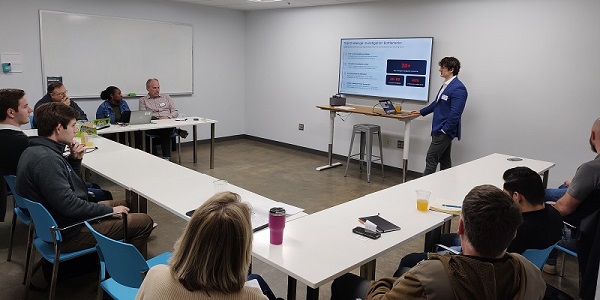
Our speaker, Nathan Blazei, is an experienced life sciences leader with a background in Quality and Regulatory Affairs. He presented his perspectives on Quality 4.0, titled “Unlocking Efficiency, Consistency, and Insight: Potential Use Cases for Artificial Intelligence in Quality Assurance.”

After a brief introduction to Quality 4.0 and associated technology, Nathan presented three potential use cases and led the discussion beyond these applications.

  • Event investigation
  • Procedure creation
  • Inspections

A common theme of the applications is automation and artificial intelligence (AI) tool’s ability to process large amounts of data. Generative AI tools can also help summarize the information from diverse data sources and answer queries quickly, saving time and improving performance.

Participants recognized that while promising, most AI systems and tools were new and in development, and few had been tested or validated in the real world. To be truly useful, the AI systems have to be integrated with the business and be trained with domain-specific data.

The fact that many AI tools are “black box” solutions was also a concern — how much can we trust the information or answers? Can we interpret it? How do we validate it? Participants seemed to agree that the tools are useful for generating the initial documents, solutions, or recommendations, which can be a time-saver, but human experts still have to fill the gaps and make the final decisions.

Despite concerns about limitations of the current technology, the participants were enthusiastic about its potential applications in Quality and Continuous Improvement, bringing up many ideas on their wish lists: pulling knowledge embedded in the organization, performing root cause analysis, creating video-based Standard Operating Procedures (SOPs), integrating skills from different experts, AI-assisted procedures, etc.

We would have continued our discussion beyond the two hours if the building security didn’t ring the bell. More is to come next year, so check our events calendar often.

ASQ Raleigh Life Sciences Special Interest Group Meeting — November 19, 2025

This event is free and open to the public. No ASQ membership is required. ASQ members will receive RU credits for attending.

Title: Unlocking Efficiency, Consistency, and Insight: Potential Use Cases for Artificial Intelligence in Quality Assurance

Abstract:

As regulated manufacturing operations embrace modern digital tools and advanced analytics, Quality Assurance (QA) faces mounting pressure to manage greater complexity and faster decision cycles. Artificial intelligence (AI) offers powerful tools to meet these challenges by enhancing efficiency, consistency, and insight across the quality landscape.

This collaborative discussion explores practical use cases where AI tools can be deployed to deliver value in QA. By connecting these applications under the broader framework of Quality 4.0, this session will illustrate how AI can shift QA from a reactive, compliance-focused role to a proactive, data-informed partner in manufacturing excellence.

Attendees will have the opportunity to share how AI tools may be gaining traction within their own QA organizations to provide real-world examples that may resonate with the entire group.

Presenter: Nathan Blazei, ASQ-CQA, RAC-US, Senior Director, Strategic Solutions at Kymanox

Bio:

Nathan is a versatile life sciences professional with nearly 25 years of experience across biopharmaceuticals, medical devices, and combination products in individual contributor and leadership roles. He has experience working for start-ups and global manufacturers, as well as in professional services/consulting. He is passionate about commercializing safe and effective products that will improve the quality of life for patients and their caregivers.

Nathan’s career foundation began in engineering, product and process development, manufacturing, continuous improvement, and program management roles. Over time, he made a transition to focus on quality and regulatory compliance to complement his technical experience. At the intersection of these disciplines is where he has found success over the years, as he can provide solutions that are not only technically sound, but also compliant with evolving regulatory requirements and at the leading edge of industry best practices.

Nathan acquired the Certified Quality Auditor (CQA) designation through the American Society for Quality (ASQ) and hold a Regulatory Affairs Certification (RAC-US) through the Regulatory Affairs Professionals Society (RAPS). Additionally, he is currently a Board Member for the Parenteral Drug Association (PDA), Southeast Chapter. Nathan has presented at domestic and international industry events on various topics relevant to the life sciences to share best practices, lessons learned, and new approaches to solving problems.


Register here.
SIG Meeting – September 2025

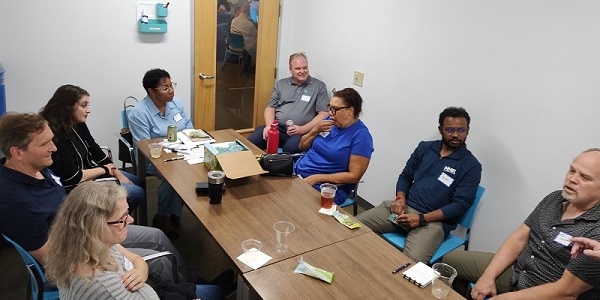
A group of 11 of us met to “talk quality” in an informal atmosphere over beer and wine on Thursday, September 11, at Frontier RTP – Building 800. Frontier’s Thursday OOO event provided drinks.

We had exciting news to share: one of our first-time attendees in July secured new employment through a connection he made with us!

There was no pre-scheduled topic for discussion, but one of our members asked how those attending thought AI would be used in Quality. It was pointed out that there are different types of AI such as:

  • Generative AI: Capable of creating new content such as text, images, music, or code
  • Machine Learning: Allows systems to learn from data and improve without explicit programming
  • Deep Learning: Uses artificial neural networks to learn complex patterns from large datasets.
  • Natural Language Processing: Understands, interprets, and generates human language
  • Computer Vision: Interprets visual information from images and videos
  • Exper Systems: Emulates decision-making

We expect our companies to experiment with and utilize all of these capabilities. We wonder about supervision and control, though. For example, suppose a vision system is continually updating its defect detection capability. How can we ensure process control and prevent unintended changes that might allow more or different types of defects to slip through or introduce new false failures?

Tim Whetten